
Posted by James Parnwell on 30th Jul 2014
Which Bow Is Good For Me?
Bow and Arrow: Which Bow Is Good For Me?
There are a couple of considerations you should keep in mind when choosing which bow is best for you.
Who is using the Bow?
The first question is who will be using the bow? Do you plan on using the bow yourself, or will you be sharing with a friend or family member? If you are sharing a bow, you should keep in mind that your strengths will most likely differ, which could require the bow to be adjustable. So the real question is, does it need to be adjustable? If it is just for you then all you need to do is find a bow that suits your strength the best. If the bow is to be shared then also consider getting one that has a draw length that can be varied also.
When considering these options, remember that these bow adjustments are not easily made and many require the use of an allen key. If you are planning on sharing a bow and going out camping or hunting, using the same bow could prove to be a challenge if you are constantly needing to make the adjustments.
Compound Bow or Recurve / Longbow?
The next question you need to ask yourself is what kind of action do you require for example a recurve/longbow or a compound bow.
Compound Bows
A compound bow is sometimes preferred as takes a lot of the strain when fully drawn, which is why you will often see advertised a compound bows let off pressure. What this means is that the pulleys will take a lot of the strain when fully drawn so you are really only holding 10-40% of its draw strength capacity. The advantage of this is that whilst aiming, your muscles will not fatigue as quickly which is ideal for target practice or hunting.
One result of this is that the highest pressure is required by the user is at the very beginning of the draw cycle. The bow bow is most difficult to draw from the beginning but, as it's drawn further back gets easier. For those with little strength, this can be considered a downside as they struggle to get the draw cycle started, and they are unable to draw the bow to its strongest point.
Another point to consider is the maintenance of a bow. A compound bow has a number of working parts which means these all need to be maintained to continue working properly.
Longbow / Recurve Bow
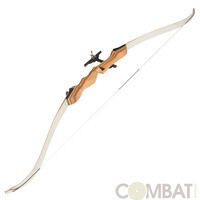
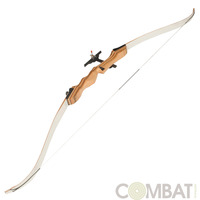
A longbow or recurve bow are similar to each other in that they do not have a pulley system. Being a more traditional bow the pressure is increased the further the user draws the string back. This means that the user can adjust to some degree the pressure on the arrow.
These bows are often preferred by traditionalist as they can sometimes consider the action of a compound bow to be "cheating" or at least an inaccurate portrayal of the archery tradition. A longbow / recurve bow is a much simpler design without the need for pulleys or crossing cables, this can also be an advantage if you want to store your bow, destruct for periods of time or you need to pack it in a very small space for transport. It can be disassembled and reassembled very quickly and easily in most cases without the need for many if any tools (usually just one allan key) where in contrast a compound bow is often very difficult to disassemble and reassemble and requires tensioning tools at best if not a whole bench bow press setup.
Atunga has a strong history of providing high quality Compound Bows and other archery supplies.
If you are looking to purchase a compound bow please go to our Compound Bow page http://www.combataustralia.com.au/compound-bows/ or feel free to contact us . We would love to help you choose the right compound bow for your situation.